
Self-Esteem: The Mantra of Feel-Good Education
Self-Esteem: The Mantra of Feel-Good Education
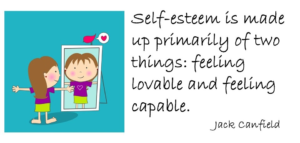
What is self-esteem, and why did it become such a buzz word and a mantra? Self-esteem is one’s subjective sense of overall personal worth or value. Similar to self-respect, it describes one’s level of confidence in his or her abilities and attributes (Paraphrased from Very Well Mind at https://www.verywellmind.com/what-is-self-esteem-2795868.) According to Very Well Mind, the key components of self-esteem are self-confidence, feelings of security, identity, a sense of belonging, and a feeling of competence. It is also called self-respect and a feeling of self-worth.
This is an important element of human psychology, and every child should be encouraged to become confident. Teachers are important in a child’s life, and they provide a lot of the scaffolding that allows a child to develop a sense of accomplishment. This is always a goal of good teachers, and generally, most people can remember a good teacher who did so. However, this concept has been applied for the last 25 years without a deep understanding of how self-esteem is developed. It has become a shallow pat on the back for anything and everything a child does, even if the praise is not earned. And its extended consequences when teachers try not to damage a child’s fragile ego have resulted in a lowering of expectations for students.
The good feelings about ourselves are rooted in our relationships to others. Kids especially view themselves and their surroundings through their interactions with others. Kids are keenly aware of when they earn something for doing well, and teachers should reward hard work and call attention to lack of hard work. In sports, which have become the arena where kids are able to tell the well-done from the mediocre, coaching means just that: providing feedback for optimum performance.
School administrators now seem to feel that children’s self-esteem is the most important factor in their education. They seem to believe that when a child is disappointed or feels sad, they must be cheered up by somehow getting what they want or getting something better. Schools hand out prizes for everyone when they play games because we don’t want the losers to feel bad. The truth is that all the kids know who the winners and losers are, but the adults are blithely happy that they have preserved self-esteem for all. They have only deceived themselves and tried to deceive the kids! I do not really think that all teachers believe in self-esteem as a primary motivator, but it appears to be official policy or at least the officially sanctioned attitude.
This theory took over and it became policy in the late twentieth century that children should not be allowed to fail. The worst effect in education is that teachers must refuse to allow students to fail in any way. This is supposed to preserve their self-esteem. Teachers are required to pass all students into the next grade so they do not experience the disappointment of failure. However, the student then flounders hopelessly in the next grade, unable to process or participate in the learning for which they have a poor foundation. I have met more students than I can say who feel “stupid” because they cannot learn at their current grade level, simply because they did not learn in the previous grades. There is a great debate about the problem of failing students, as they say these students never catch up and are more likely to fail in future grades. Hwang and Capella (2019) interestingly cite reading failure as the greatest reason for failing to learn in any grade (https://www.tandfonline.com/doi/full/10.1080/19345747.2018.1496500). That says something more about how they teach reading than about the poor student who falls victim to their failure to teach reading properly. (See Are You a Genius Because You Can Read?). And it also points to how the child was kept from knowing the depth of his problem before it was too late to fix it. Denying his failure was supposed to maintain his self-esteem. But it backfired! He now feels like he is stupid rather than just badly trained.
Everyone wants to be good at something and to get praise for it. But when teachers praise kids just for showing up instead of rewarding them for doing their best, we actually undermine their character. We make them feel entitled to accolades for whatever they do instead of providing feedback on how to improve their performance. The concept of reaching for more and trying harder needs to be taught. Encouragement is providing good feedback and letting the child know he is capable of achieving a high standard. That effort may not measure up to someone else’s performance, but he can try to do his own best.
The concept of what constitutes achievement through hard work has also morphed in meaning. Achievement now refers to what the student can do, not what the student is capable of. It used to be my job as a teacher to call the students up to their best work and not allow sloppy thinking or work. Failure to produce their best was judged and given a C or a D grade. In today’s classroom, teachers are not allowed to judge a student’s work except in the vaguest terms. Report cards are filled with euphemisms that students and parents are unable to truly decipher. The following scale comes from the new Alberta curriculum:
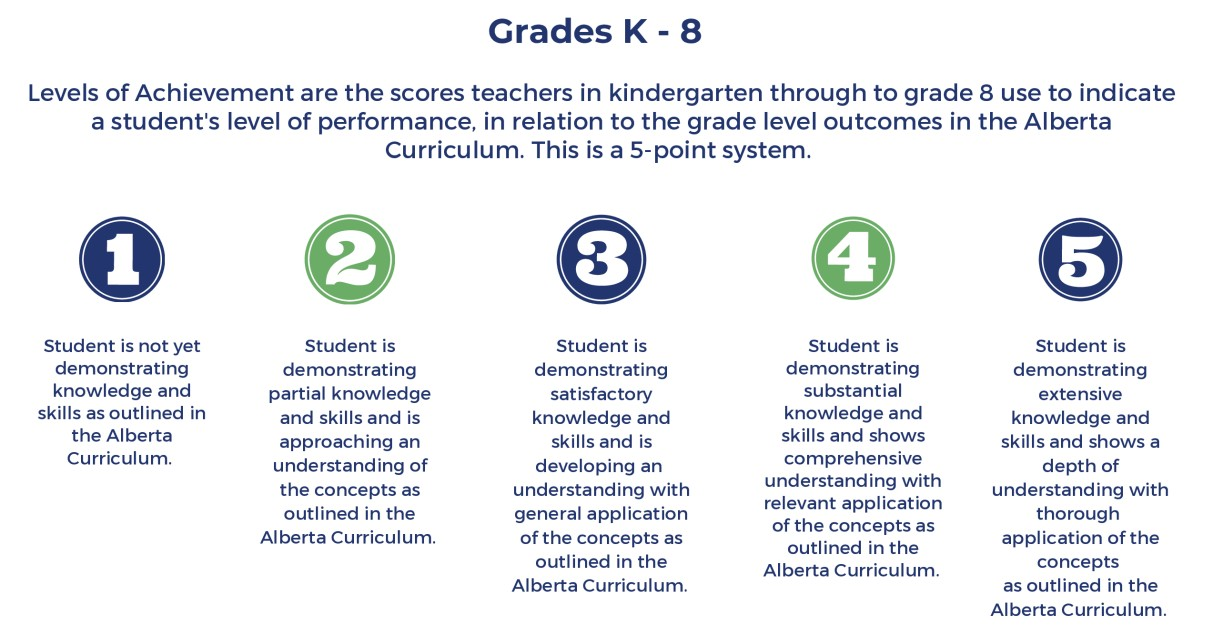

https://www.foothillsschooldivision.ca/page/15832/assessment-reporting#:~:text=Grades%20K%20-%208%3A%20Levels%20of%20Achievement%20are,the%20Alberta%20Curriculum.%20This%20is%20a%205-point%20system.
In British Columbia, the scale looks like this, from https://burnabyschools.ca/reporting-and-assessment/
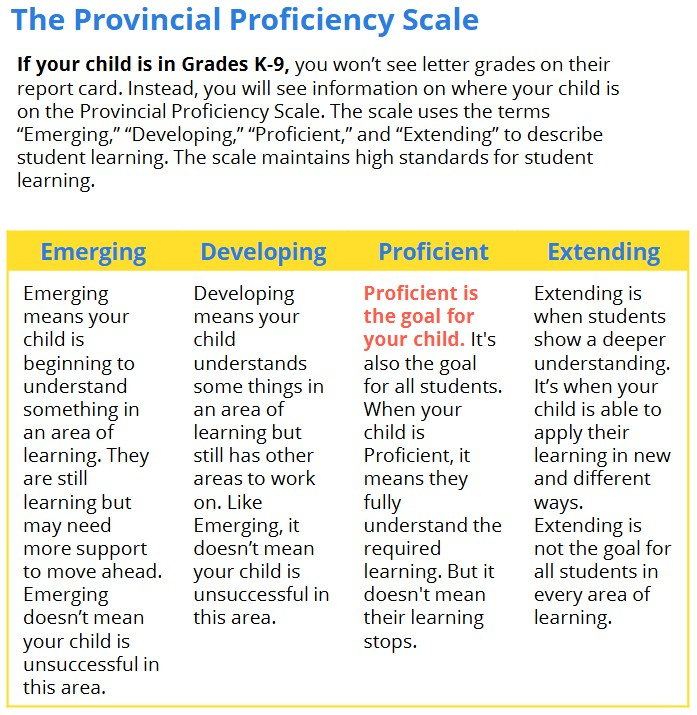
The vague descriptions you can read here leave the parents wondering what their children are learning, if anything. Can the child add and subtract sufficiently well to move on to the next concept? Has she learned to read well enough to tackle more than a levelled reader? (If you wonder what that is, see my blog on Learning to Read.) Teacher/Parent conferences are supposed to answer such questions, but often the teachers are hard-pressed to provide a full assessment. They may not give tests, but only “assess” how the student is “participating” and “engaging” with the lessons.
Why has this become the norm? It is because the administrative educators do not want to admit their experimentation with Math and Reading education has failed. (See the blog about “Discovery Learning”.) It is more important to allow the student to feel good about their abilities than to actually know whether they are learning all they can. To add to the confusion, this kind of assessment requires much mental gymnastics and teachers often give higher assessments than they should based on the false belief that this will encourage the student to learn more. To them, not meeting the grade makes the student feel bad. If you know anything about human nature, most people, especially immature children, are content to stay where they are at if they think it is good enough.
As noted above, too many children fail to learn what they should in a grade and then move through the system without the skills needed to succeed at higher levels. As a tutor and teacher in a post-secondary facility, I personally have taught hundreds of students who wanted to pursue higher education, who had received a high school diploma, but who were unable to pass the entrance exams to get into their chosen professional program. They had to take high school level courses to upgrade just to get into their chosen programs. Some could not read or write well enough, and many had low math skills. Their post-secondary education was delayed by one or two years. They had been passed through the system without adequate learning. Their self-esteem was not improved by the experience, and too many gave up.
How can we fix this system? First, we recognize the damage the erroneous theory of self-esteem is doing. Parents can find a reputable tutor or teacher who will do an honest, straightforward assessment through testing and grading. There are concrete benchmarks to meet, and children can meet them if given the proper support and disciplinary scaffolding to achieve them. Many have turned to homeschooling, and I am a proponent of parent-led education. However, it can be difficult to find a homeschool curriculum not bending to the theories of self-esteem and discovery learning. And these curricula can be expensive and prepared by teachers who assume you know how to administer the lessons. In addition, I believe we can return the public education system to a more normal condition where practical learning is more important than theories proposed by educated non-teachers.
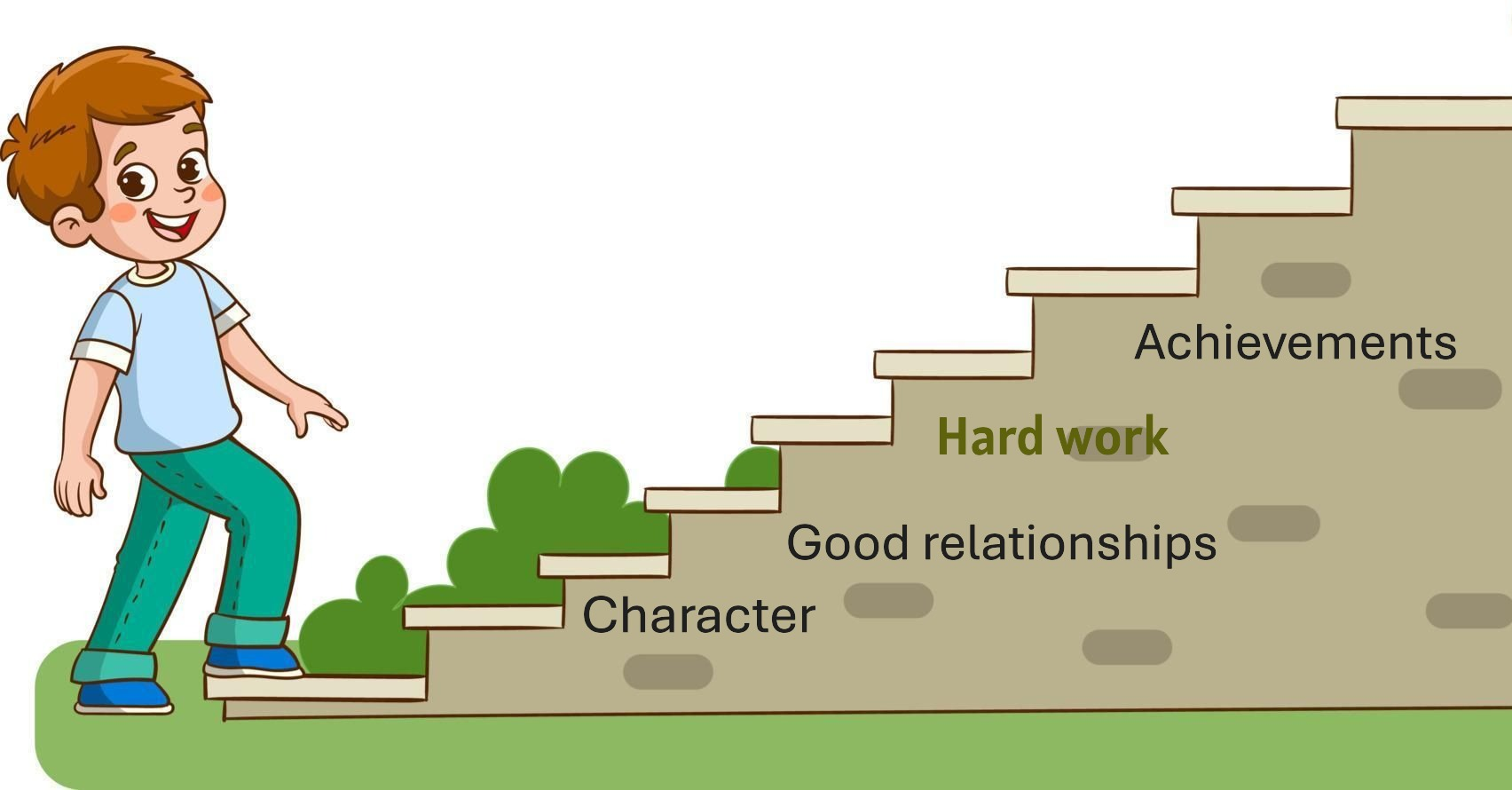
In conclusion, I believe self-esteem is important. When people value themselves, they can value others. It is not a self-centred way of perceiving oneself. It is having the confidence to move in the world to find ways to improve oneself and those around him or her. Confident people have character, values, and good relationships. They achieve the goals they set out for themselves. They know their worth because they have a good work ethic. They also recognize when they have fallen short of their values and goals and work to repair what is lost or broken. Self-esteem has humility, not arrogance and pride. People with good self-esteem care just as much about others as they do about themselves.
These are the principles we need to be teaching at school, producing graduates who can take their place in a world that desperately needs intelligence with humility and compassion. We need teachers to tell the truth, to grade in simple, clear terms, and provide proper discipline to guide children into healthy living.