About Modern Education
About Modern Education
Canadian education has changed significantly over the past 150 years. From its beginnings as places to learn to read by using the Bible and a speller, to modern theoretical experiments on students using technology, educational endeavours have always attempted to shape students’ minds. Yes, education has been more about shaping successive generations for a purpose than just teaching kids how to learn. It is, after all, relatively easy to get students engaged with things that interest them. And young minds are notoriously easy to mould. The following poem has this truth as its message:

Children Learn What They Live
By Dorothy Law Nolte, Ph.D.
If children live with criticism, they learn to condemn.
If children live with hostility, they learn to fight.
If children live with fear, they learn to be apprehensive.
If children live with pity, they learn to feel sorry for themselves.
If children live with ridicule, they learn to feel shy.
If children live with jealousy, they learn to feel envy.
If children live with shame, they learn to feel guilty.
If children live with encouragement, they learn confidence.
If children live with tolerance, they learn patience.
If children live with praise, they learn appreciation.
If children live with acceptance, they learn to love.
If children live with approval, they learn to like themselves.
If children live with recognition, they learn it is good to have a goal.
If children live with sharing, they learn generosity.
If children live with honesty, they learn truthfulness.
If children live with fairness, they learn justice.
If children live with kindness and consideration, they learn respect.
If children live with security, they learn to have faith in themselves and in those about them.
If children live with friendliness, they learn the world is a nice place in which to live.
Copyright © 1972 by Dorothy Law Nolte (http://www.empowermentresources.com/info2/childrenlearn-long_version.html)
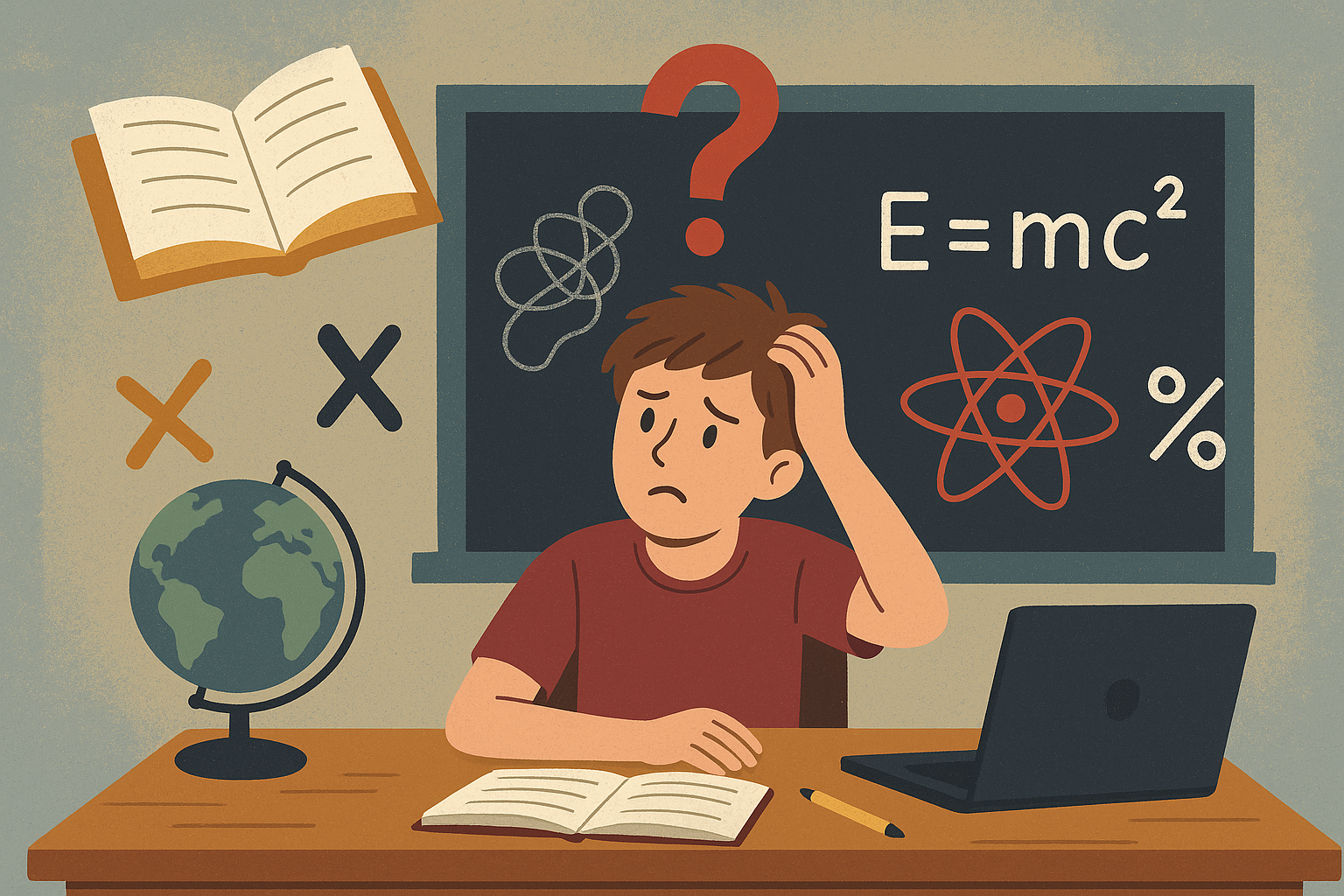
How are children being taught in modern schools? See my blog on the State of Modern Education.
Keys to the Downhill Slide
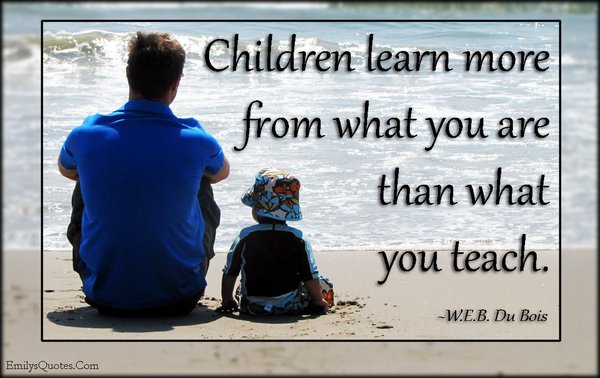
We humans live according to what we believe. Our beliefs govern our actions. If a parent really believes they can teach children to “do as I say and not as I do,” they will be unhappy with the results. Children mimic what they see modeled because they see more than they hear. Healthy humans are kind and compassionate, friendly and honest. But they only become that way when they are taught to be like that and they see it lived out in the life of someone they respect.
How does this principle of children’s learning what they see apply to schools and the education students receive? Teachers are the models. Children spend a lot of time in school. Teachers are responsible in the schools for providing the lens through which the students see themselves and others. Sadly, many parents believe the leaders in schools think like they do and uphold the same principles. However, what I learned when I studied the teacher education curriculum, and heard from students how some of their teachers behaved, I had to conclude that teachers are taught some fundamental beliefs that contradict my beliefs and those of most of the people I know.
First, I believe hard work is the key to any kind of success. Second, I believe kids should be taught what they need to know to become responsible adults. Third, I believe learning self-discipline is part of maturing. Then, I believe learning to read well is one of the most important first steps in education, and I believe that memorization plays an important part in learning. And I used to believe that most educators believed those principles also. However, my experiences as a teacher and a tutor have taught me otherwise.
The following list of theories that were introduced into teacher curricula and then into schools has brought about a spate of changes to education over the years that leave students confused, wounded, and immature instead of trained to handle life.
THEORIES that Prove to be LIES
- Self-esteem is the most important factor in raising children. See “Self-Esteem: The Mantra of Feel-Good Education”.
- A student’s feelings are to be validated, no matter how confused is the feeling. See “Is Validating Feelings More Important than Learning?”.
- Discipline means harming a child. See “Discipline or Punishment?”.
- The traditional ways of learning by memorization are old-fashioned and useless, if not harmful. See “The New Math Confusion”.
- Children learn naturally and rarely need guidance to learn. Constructivism, or “Discovery Learning” means setting the child adrift to guess at what they are learning. Educational pundits believe that is more interesting to students. See the page called “Modern Educational Philosophy”, and “Reading Wars: Are You a Genius Because You Can Read This?”.
- When a student is struggling, it is never his fault; he must have a learning disability. See “The Creation of the Learning Disability Boom”.
- All students want to graduate at the same age, usually 17. See “Education in the Fast Lane”.
- All teachers are caring and knowledgeable, knowing what is best for other people’s children because they have an education. See “Good Teachers in a Bad System”.
- Parents are peripheral to a student’s life and are usually too ______ (whatever) to really know how to handle their child’s education and upbringing. See “The Greatest Divorce”.
- School is supposed to be fun. Hard work is not necessary. See “A Work Ethic or a Fun Ethic”.
These ten theories are each damaging in practice, and together have caused the pitiful state of modern education that is harming students and teachers alike. Each of these is discussed at length in the other blogs I have posted, and I hope you can take the time to read about what really happens in too many classrooms.
A further study concerns what happens to teachers when they try to apply the principles discussed above. The rate of teacher dropout is now becoming obvious and only the strong or the uncaring survive. Many stay because they are natural teachers and always work harder and harder to provide some learning for students while the system continues to demand more and more. Some stay because they do just enough to survive and take the summers off. Some get more education and work their way up the ladder to administration, where their knowledge turns into control of the system. Some stay just for the money or the security, both of which are rapidly becoming not enough. In any case, teachers become a different kind of victim and the school children suffer.
Some suggested reading:
Weapons of Mass Instruction by John Taylor Gatto
Dumbing Us Down by John Taylor Gatto
School’s Out by Andrew Nikiforuk (Written over thirty years ago, it is even more relevant now. This one is Canadian, and well worth the read.)
The Deliberate Dumbing Down of America by Charlotte Thomson Iserbyt
The Lost Tools of Learning by Dorothy L. Sayers
The 5 Hour School Week by Kaleena Amuchastegui, Aaron Amuchastegui, et al.
Free to Learn by Peter Gray
Explicit, Direct Instruction (EDI): The Power of the Well-Crafted, Well-Taught Lesson by John R. Hollingsworth
Challenges for Learning
Learn At Home
Even if you or your child go to school, learning in the comfort of home can be very important. Whether through tutoring sessions or a plan of reading for learning, use the time at home wisely to expand horizons and extend the learning.
Study Tactics
Studying must be systematic and guided. Just reading notes is not enough. Discover ways to improve your study habits.
Real Time Discussions
One of the best ways to clarify your thoughts and learn is by discussing the topic with another person. Come with questions and share what you have learned.
Learning Disabilities
The prevalence of learning disabilities (LDs) has increased dramatically since the 1990s. Dyslexia, autism spectrum Disorders, and ADD or ADHD are the most prevalent. Learn what they are and how to deal with them.
Expert Tutoring
An expert tutor knows how to pinpoint syptoms that keep the child from learning. Through interaction with the student and various formal and informal tests, a good tutor can assess how best to help.
Homework Help
Some students need help getting through the homework assigned. A second look at the homework task with fresh eyes away from the classroom can clear up misunderstandings and help the student grasp what they are learning.
The Focus
My goal as an educator is to provide each learner with the help he or she needs to succeed. Each learner has a unique set of needs. So the focus is on you, the student.

Let’s Learn Together!
No matter what educational need you have, two heads are better than one! Book a consultation and let’s see how I can help.