
Constructivism as an Educational Philosophy
The Philosophy

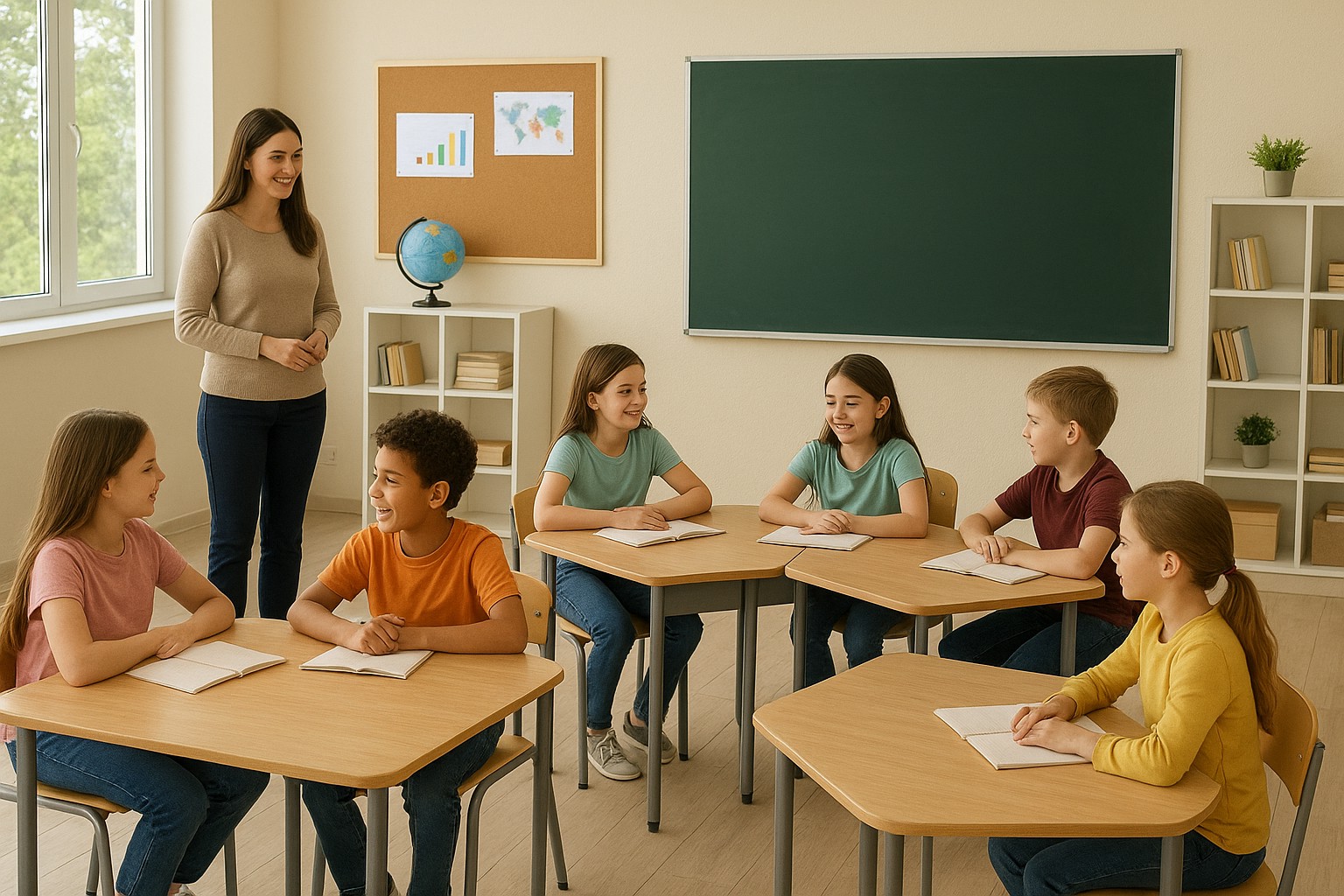
The main tenets of the theory of constructivism are:
- Discovery is the best way to learn. Students must discover their new knowledge and attach it to previous knowledge.
- The curriculum and classroom are student-centred rather than teacher-centred.
- Students discover what they need to know by asking their own questions.
- Students rely on their own knowledge of the world to construct the meaning of what they discover. They rely on previous knowledge to gain new knowledge.
- A student’s experiences and activities are the bases of their learning.
- Learners don’t have knowledge forced on them by teachers; they create it for themselves.
The Application of Constructivism
Teacher Roles
According to the constructivist theory, teachers are facilitators of “learning opportunities.” Because the teacher is not to be a dispenser of knowledge to be learned, she must prepare lessons that provide experiences to learn through. The learning of facts is not as important as the students’ creation of their own facts. Teachers are not to be forcing kids to learn things that they are supposed to discover for themselves.
Lesson Planning
Lessons are prepared with certain topics in mind, and activities are meant to facilitate learning by discovery. Constructivism is often called “Hands-on learning”, so there must be some activity, something for the kids to handle and manipulate for learning to occur. The lesson must not contain any lecturing or note-taking unless it pertains to their chosen activity.

Learning to Read
Constructivists believe that learning to read is as natural as learning to speak. The theory is that if children listen to books being read to them and take note of the pictures that go with the story, they will be able to start learning the words. They must learn whole words, though, as the phonics is limited to learning specific phonemes that create rhyming words. “Word walls” full of rhyming words are popular.
Learning Math
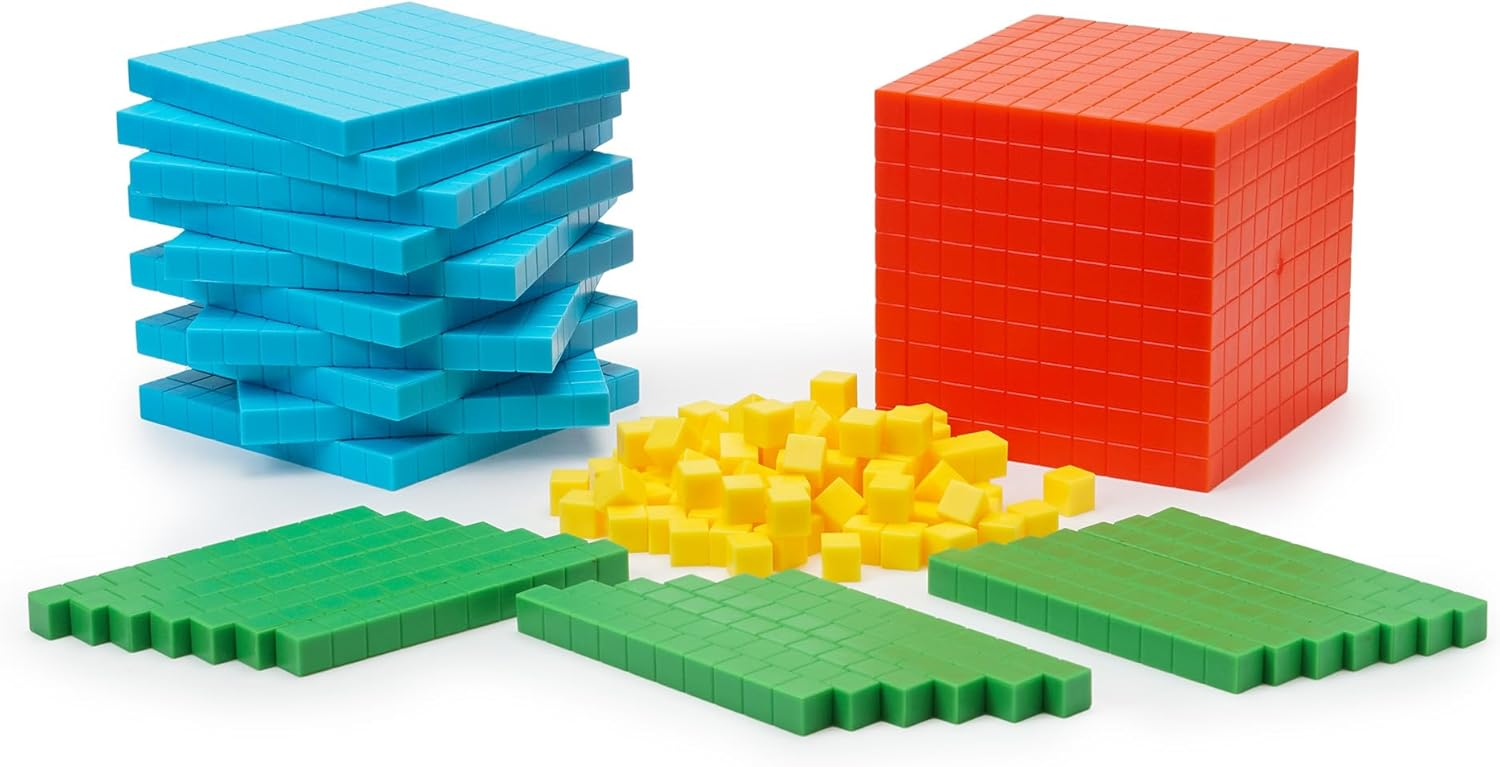
The new math, generally, means kids are asked to use manipulatives and to explain their discoveries of learning. For example, they are asked to write out why three blocks of ten-unit blocks make thirty. This makes them discover how math works. They do not learn to memorize the addition or multiplication tables; they are given sheets of the facts to consult, or they have a calculator. Concepts are to be discovered naturally through experiencing numerical activities.
The Outcomes of Constructivist Philosophy
Since the beginning of its widespread application in the late 1970s, the literacy rates and math scores of Canadian students across all provinces have gone down. Here is the breakdown.
Teachers
In the constructivist classroom, teachers are not supposed to be in control. The students are given the responsibility of learning what they do not know and teachers are tasked with finding ways of getting the students to discover what they don’t know. The teacher is not to provide the knowledge.
Of course, in a real classroom, this cannot work. Students come to school prepared to learn from the teacher. Children are wired to learn, but they require someone to lead. Parents send their children to school so teachers can teach them. However, because activities are supposed to be the discovery part of the lesson, the teacher must find “engaging” projects through which students will discover something. He is not to dispense the knowledge to the students, but to guide them toward discovery.
Here is a quotation from one website. “In the rapidly changing world today, the role of teachers has evolved from the traditional image of a teacher standing in front of a classroom, delivering lessons from a blackboard. Success is judged on children’s abilities to remember this information and use it within strict time limits. While this might produce academically smart children, they may end up lacking in other skills vital today to become employable. Moving from rote memorization, modern education has advanced to nurturing learners so that they become critical thinkers who are creative and emotionally intelligent” (www.piexeducation.com/the-role-of-teachers-in-modern-education, underlines mine). Modern “experts” believe a child’s feelings are more important than academics, so how well they succeed academically, it is better to be touchy-feely. In addition, critical thinking has nothing to do with emotions.
Traditionally, teachers had textbooks that allowed for a sequence of lessons that delivered the material in chunks so students had time to absorb the information. Students took notes and/or answered question designed to pull out the understanding of the lesson. This method was too didactic for the pundits who influence the administrators. So the textbooks were removed. Apparently, knowledge cannot be discovered in the pages of a text.
It makes one wonder how a child is supposed to learn how to do long division. Is that discoverable? That is likely why it is not taught any longer in many schools. How is one supposed to discover the names of the parts of a human heart? Ah! By watching a video and letting someone else teach the facts. So, the teacher is relegated to being a planner of activities designed to create the discovery of knowledge. No wonder there is no real teaching on how to deliver a lesson in the teacher training curricula of our modern universities. Teachers are passive facilitators. This statement is the most telling of all: “’Every time we teach a child something, we prevent him from inventing it himself,’ said Jean Piaget” (https://hrdevelopmentinfo.com/pros-cons-constructivism-modern-day-education/) If the goal of education is for every student to invent his or her own knowledge base, then our world is headed for catastrophe.
Lesson Planning
Lessons are prepared with certain topics in mind, and activities are meant to facilitate learning by discovery. Constructivism is often called “Hands-on learning”, so there must be some activity, something for the kids to handle and manipulate to learning to occur. The lesson must not contain any lecturing or note-taking unless it pertains to their chosen activity.
For example, if the topic for a science unit is biodiversity, students are taken outside and asked to find as many things as they can within a certain biome, like a pond. They are asked what they have found, asked to sketch the pond and their findings in it. They may be given an opportunity to discuss how these things work together in the biome. The definitions and explanations of biome and biodiversity are to be understood through the sensory experience.
The following day, they would be shown a short video on biodiversity and they might have to write a few sentences about what they learned. The next lesson could involve creating a diorama of their favourite biome, taking a few days to complete it, and they would present them to the class. That would be all. The unit on biomes is done. That would be called constructivist learning because of their experienced learning. The students are learning what these things look like in a biome, but their ability to articulate and describe what a biome is and how the biome works together is limited. The learning is all sensory and not intellectual.
In a more traditional classroom, to complete the learning, these students would be asked to learn the terms and their definitions, write them down, be able to understand and recall the definitions. They would eventually present that information to prove their learning either through a test or a report. The knowledge of how to prove their understanding is the part the constructivists leave out. They truly believe that whatever the students construct in their minds through the hands-on process is good enough. They believe that if the student is interested, they will delve into the subject themselves. It’s introductory learning at best, not a real education. Modern students cannot tell you what they learned at school because it is too random to articulate clearly.
Learning to Read
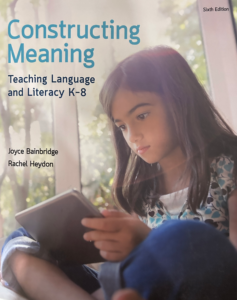
The constructivist theory has had its most devastating effect on literacy. The method is called “Whole Language”, as it is hoped that children can catch onto the whole meaning of language while they learn to read. The theory states that reading is as natural as learning to speak. Exposure is all that is needed.
It is now stated that at least one third of a regular classroom cannot read well enough to decipher a simple passage in a textbook. Therefore, there are no texts in a modern classroom. There are levelled readers which portion out recognizable words in chunks that create a repetitive story. And there are pictures in the books, lots of pictures to help the kids have a clue about what the words might say. They are told to guess if they don’t recognize a word, based on what is in the picture. However, as the image above shows, teachers learn that reading does not necessarily refer to the printed word. This young girl may be watching a video on her tablet, and as long as she understands, she is considered literate.
“Literate” used to mean able to read and write. But the modern definition of literacy is very complex. Here is an example from a text for prospective teachers called Constructing Meaning by Joyce Bainbridge and Rachel Heydon (2017, Nelson Education Ltd.). After many pages outlining the dimensions and modes of literacy and a discussion of multiliteracies, meaning people who can read and speak in more than one language, they arrive at a lengthy definition. I can pick only a few sentences out of their lengthy definition:
“[We] work from a broad definition of literacy that comprises the six dimensions, includes new media, and recognizes that certain modes can be supportive of the acquisition of other modes; for instance, visual representational modes, such as drawing, are foundational to the development of reading … Given the importance of print literacy in Canadian society, however, we do place it at the forefront of our pedagogical focus. Print literacy is
‘the reading and writing of some form of print for communicative purposes … it involves decoding and encoding (italics and underline mine) of a linguistically based symbol system and is driven by social processes (italics and underline mine) that rely upon communication and meaning’ (Purcell-Gates, Jacobson, & Degener, 2004, p.26, as cited in Constructing Meaning, p. 7).
My interpretation: Literacy has now grown in meaning from reading and writing to involve any kind of communication, including watching videos and looking at pictures, which, by the way, should help you understand words that are made up of the letters of the alphabet (symbols) that one should be able to sound out to get words. If this is confusing to you, it should be. Constructivists are more concerned with getting meaning from any kind of material than in reading the words available to understand what is actually written.
Learning Math
The new math. Every parent has had to learn what that means. Generally, it means kids are asked to use manipulatives and to explain, for example, why three blocks of ten-unit blocks make thirty. This is supposed to make them discover how math works. They do not learn to memorize the addition or multiplication tables; they are given sheets of the facts to consult, or they have a calculator. See the blog on the New Math for a fuller explanation.
Curriculum Development
In the hodgepodge world of constructivism, sequential and deliberate curriculum preparation is thrown by the wayside to allow for the free expression of students’ learning desires. It is unfortunate, though, that it is teachers who must prepare and deliver the curriculum. To remedy the “boring” delivery of regular and sequential curriculum, textbooks have been removed from the classroom. Therefore, teachers are required to invent the curriculum themselves by following vaguely outlined sets of criteria contained in the massive new curriculum documents adopted by many provinces, notably British Columbia and Alberta. These tomes are replete with lofty explanations of the ways students are to think about and prove their learning.
Little in these provincial curriculum documents’ word salad is devoted to how to deliver these criteria to a classroom of varied interests and abilities. And there are no recommended texts or delivery formats to turn to. Teachers are required to make it up as they go.
There are many, many websites that offer lesson plans for units of learning. It is up to the teacher to find and prepare the lessons for the day, week, and month from a wide variety of available unit and lesson plans. The viability and usefulness of the lessons are as varied as possible, and it is the teacher’s responsibility to find out if it has a worthwhile approach and if the students have learned anything. This is a very time-consuming and tedious task and many teachers do not get paid for the preparation time.
The Disadvantages of Constructivist Learning
Here is the best description of the negatives of the constructivist education philosophy:
“The biggest disadvantage is its lack of structure. Some students require highly structured environments in order to be able to excel.
Constructivism calls for the teacher to discard standardized curriculum in favor or a more personalized course of study based on what the student already knows. This could lead some students to fall behind of others.
It also removes grading in the traditional way and instead places more value on students evaluating their own progress, which may lead to students falling behind but without standardized grading and evaluations teachers may not know that the student is struggling. Since there is no evaluation in the traditional sense, the student may not be creating knowledge as the theory asserts, but just be copying what other students are doing.
Another disadvantage is that it can actually lead students to be confused and frustrated because they may not have the ability to form relationships and abstracts between the knowledge they already have and the knowledge they are learning for themselves.
Constructivism can have its place in the learning system, but as an absolute learning system it has some flaws. Students may benefit with some constructivism principles integrated into the classroom setting, however, most students need more structure and evaluation to succeed.” (https://www.brighthubeducation.com/teaching-methods-tips/76645-pros-and-cons-of-constructivist-learning-theory/)
Conclusion
The philosophy of constructivism, often labelled as “Discovery Learning” or “Hands-on Learning”, has created for the business of education the equivalent of a smoke screen for experimentation. Children are made to experiment to learn, teachers must experiment to find out what they can do with all the kids they have in classrooms, and in the end, administrators and proponents of the system get to experiment with the futures of our children.
We need to change the system to allow for Explicit Direct Instruction, a method for delivering lessons with clear objectives, and clear instructions so students know what they are expected to learn.EDI is discussed in “What is EDI?” Find it in the Blog page.
Let’s Learn Together!
Your educational needs are unique to you. I can help you over the hurdles to get to success in school.